How to plan a kick-off event: six steps from goal to show day, the right tech for speeches and video, and a budget with no hidden items.

For many companies the start of the year is the one event where everyone comes together: a look back, the goals ahead, new products, often an evening programme. Planning a kick-off event therefore means two jobs at once: a programme that holds attention, and technology that makes every word land. This article puts both into one sequence, names the proven technology building blocks and explains how to structure the budget so that the quote holds no surprises. It is written for anyone planning a corporate event without being an event professional.
A kick-off mixes formats: stage and presentations in the morning as at a conference, then a product launch or awards, in the evening the party. In our event configurator, conference, staff party and product presentation are separate event types with their own modules; a kick-off borrows from all three.
What customers write to us is clear: the focus is on speech intelligibility and high-quality playback of video and music, not on party sound later on. A typical programme block from an enquiry: welcome five minutes, short talk fifteen minutes, panel of four seventy minutes. Blocks like these define the technology: how many people speak at once, how many microphones the panel needs, which laptop plays what.
Request the technology ideally two weeks in advance; at short notice, whatever stock and crew allow is possible on request. Every production at photon runs through the same chain: picking, delivery, set-up, show, dismantling, return. Delivery is often scheduled for the day before, so that show-day morning stays free for sound check and rehearsal; whether the venue allows that is a step-2 question. Customers regularly ask how much lead time the set-up needs and whether access the day before is required; pass that question on to the venue early.
In our quotes, technology is sorted into fixed groups: sound, lighting, rigging and truss, power, peripherals. For a kick-off that means:
For panel and discussion formats see conference technology; the framework for a conference or a product presentation is on the occasion pages.
The most frequent question in our enquiries is: roughly what does it cost, and is the date feasible? Two things help before any figure is on the table.
First: ask for the quote in separate line items: stage, sound, lighting, LED or projector, crew, transport, set-up and dismantling, power, VAT. That is exactly what customers ask for who want a complete package from one source and no additional costs later.
Second: ask for variants. Wordings such as "entry, mid-range and premium package" or "a professional standard option and a higher-grade premium option" come word for word from enquiries to us and work because they reduce the decision to two or three levels. Which level fits depends less on guest numbers than on programme and room: a panel of four needs four microphones, whether 80 or 300 guests listen.
We do not quote flat prices; they follow room, programme and duration. You get a non-binding estimate via the event enquiry; everything from one source is described in the complete package.
A solid quote needs six details:
In our enquiry form, contact comes first: once you click “Start enquiry”, your request is already with us, and you can add the other details in six short steps if you like, through to review and submit. Entries are saved as you go; you can pause and continue later. If you would like to see the technology first, assemble your set in the event configurator (German-language): choose conference, staff party or product presentation, pick the room type, add modules.
A kick-off event succeeds when programme and technology are planned together: first the goal, then room and guest count, then the running order, and only then the technology. Keep that order, read the quote in separate items, and you have no surprises on show day. Send us floor plan, guest count and programme via the event enquiry; we plan the rest together.
Ideally two weeks before the date; at short notice, much is still possible on request. The earlier floor plan, guest count and programme are available, the more precise the quote.
Six: the event with date and times, the venue, the technology for sound, lighting and media, the set-up and dismantling times, the number of people with a budget range, and a contact. Our enquiry form asks for the contact first and then for exactly these details.
It depends on room, daylight and content. State whether the room can be blacked out and what will be shown, and you receive a proposal with a size; customers explicitly ask for this recommendation.
That depends on the programme. The standard crew of a production is project management, an event technician and technical assistants; on show day a sound operator and a lighting operator join when panel, playback and lighting cues are run live.
Have stage, sound, lighting, video, crew, transport, set-up and dismantling, power and VAT listed separately and ask for a standard and a premium option. Then you see what one level more costs.
Yes, if both parts of the programme are in the same enquiry. Sound and lighting are then designed for speeches and for the evening instead of being built twice; the chain set-up, show, dismantling stays the same.
Call us or send us your enquiry. To start, your contact details are all we need – you can add the details afterwards in six short steps.
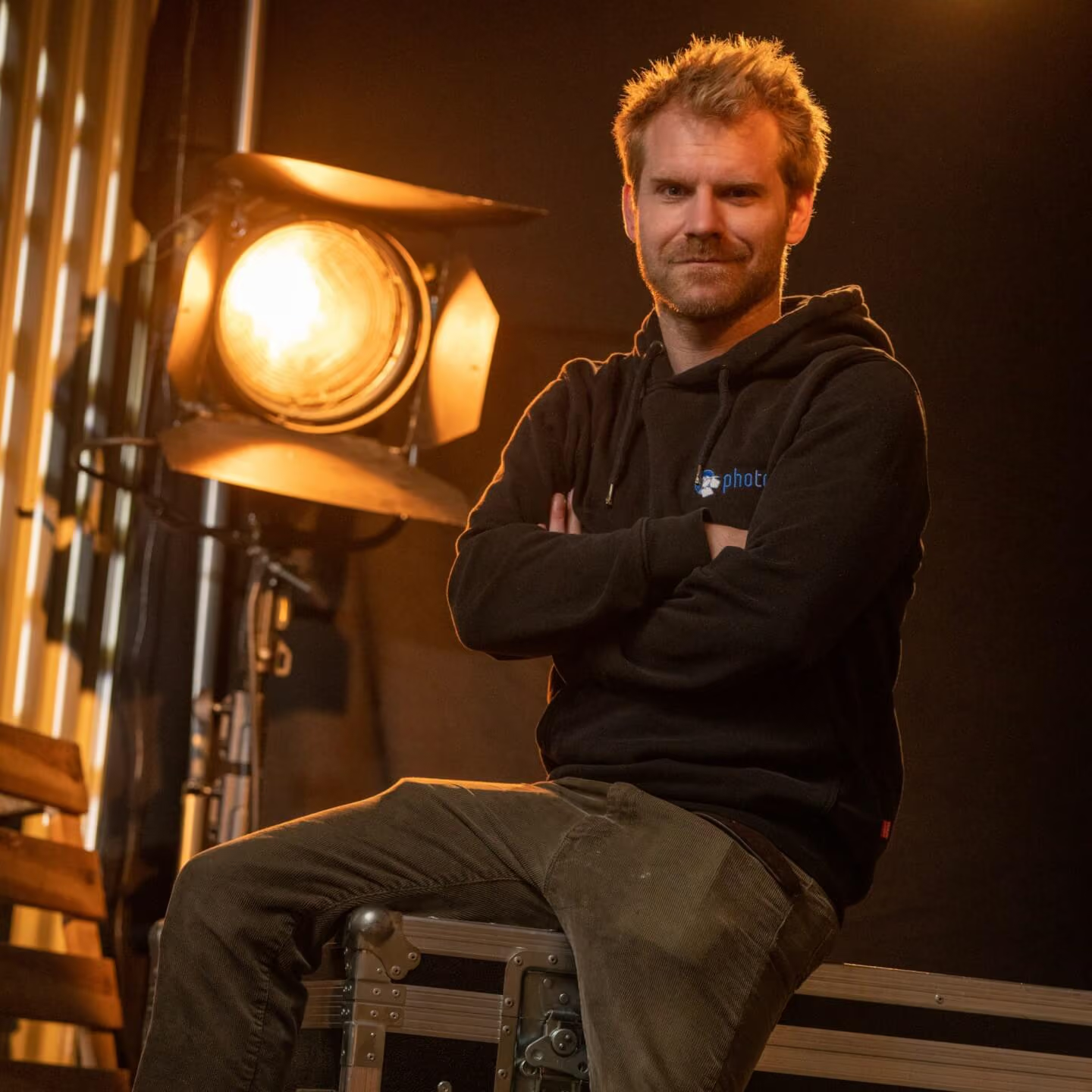
Christian Fino BeyerManaging Director · Master Technician for Event Technology
5.0 out of 5 stars on Google


