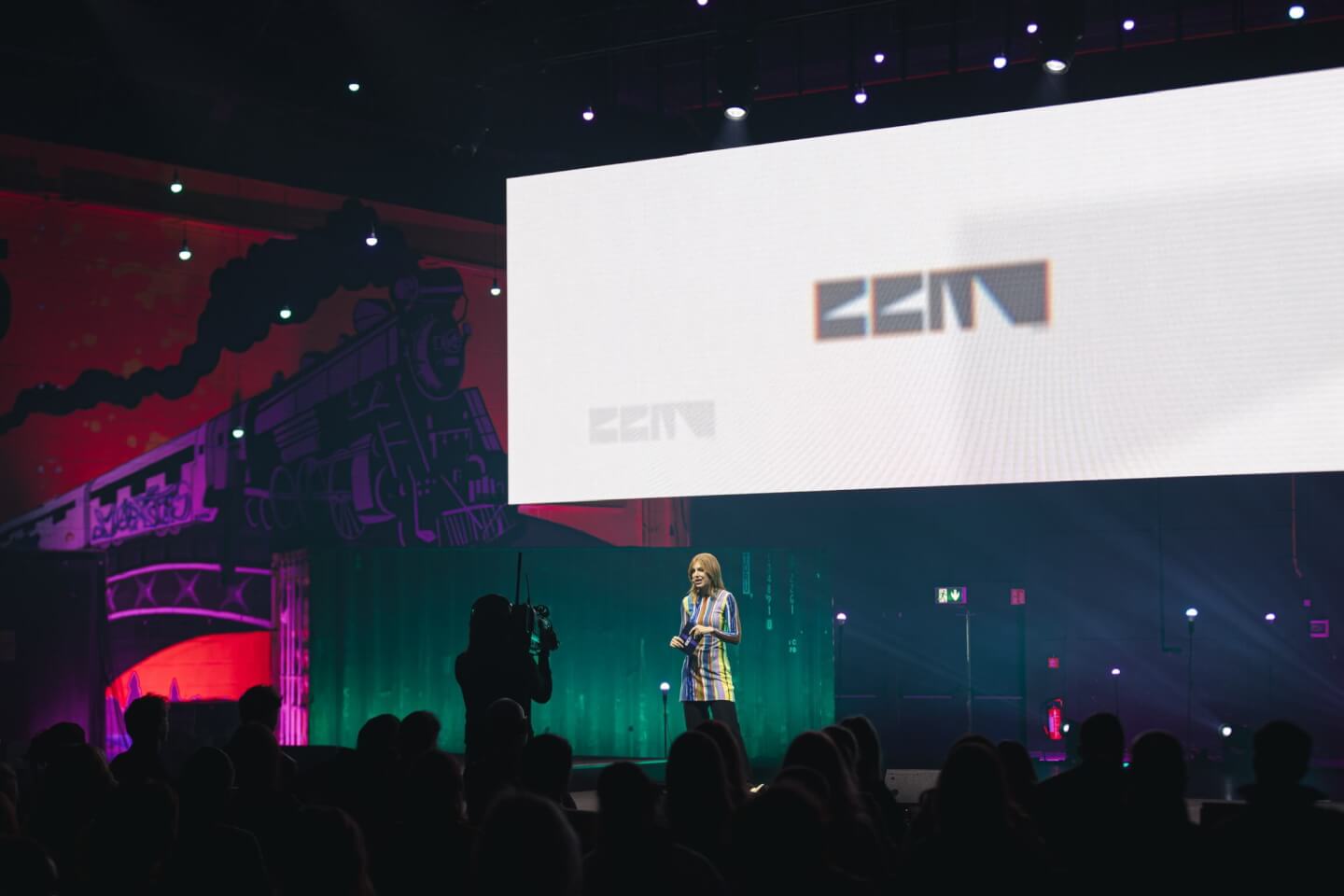
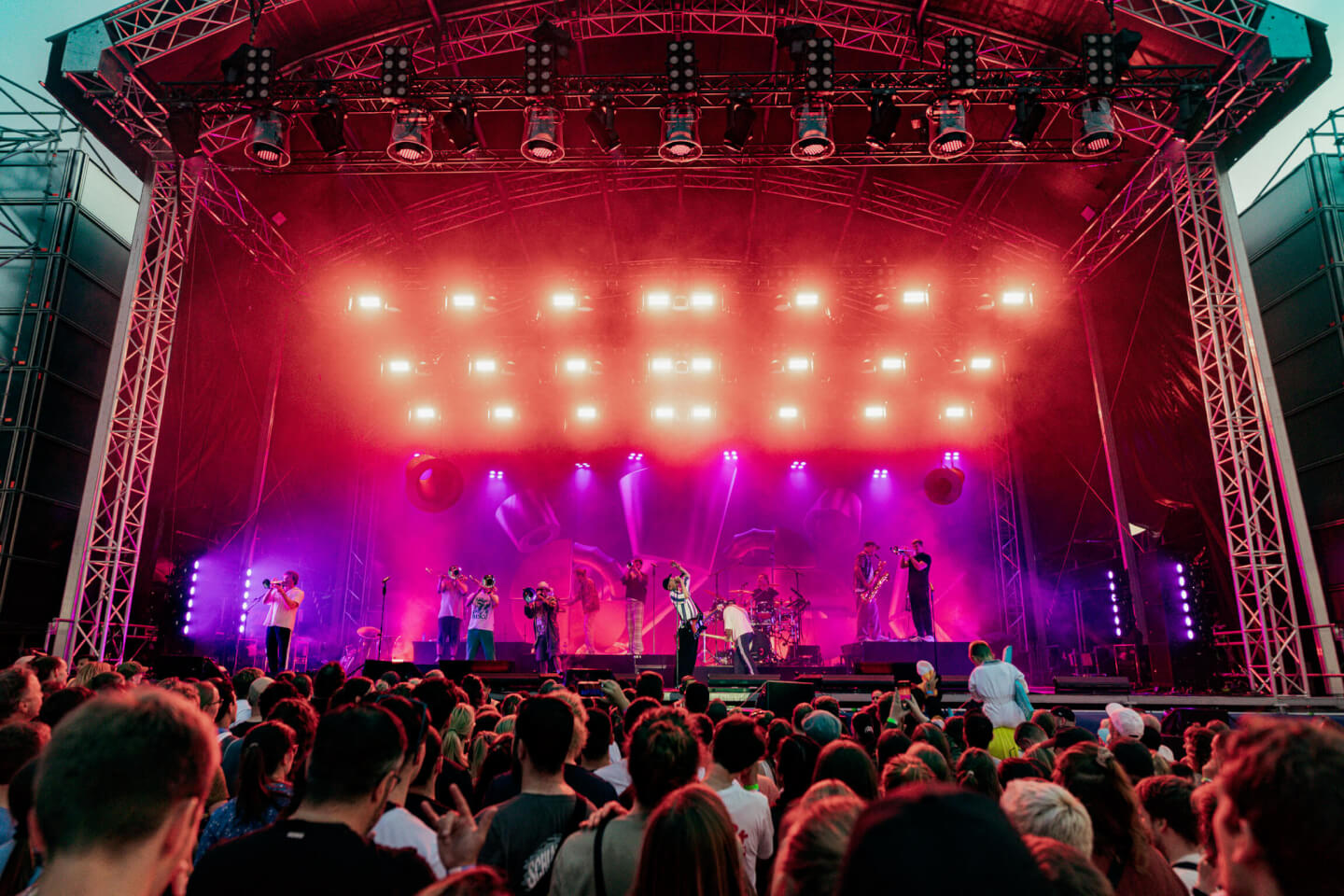
Stage construction and rigging: staging systems, trusses, loads over people and applicable standards – explained by a Master Craftsman in Event Technology.

The audience sees the show. What it doesn’t see: the equipment overhead that holds every light, every speaker and every video wall in position. Stage construction and rigging are the structural engineering behind the event – an area in which mistakes don’t just spoil the look but can put people in danger. This article explains what an event stage consists of, which rules apply and how to recognise a clean setup.
An event stage has two separate load-bearing systems: the stage floor, which transfers the load downwards, and the truss structure above it, which carries the lighting, sound and video. Both are planned separately, loaded separately and verified separately. The floor carries the people, the rigging carries the technology – and the loads on both must be known before the first part is in place.
Mobile stages are built from modular platform systems – for example from Nivtec, Layher or Bütec. What matters is the permissible load at the chosen build height, and that is stated in the manufacturer’s approval for the system. Under building regulations, accessible stage and assembly areas are designed in accordance with Eurocode 1 (DIN EN 1991-1-1); for areas where crowding may occur (load category C5), the calculation is based on 5.0 kN/m². The higher the stage, the more important lateral stiffness and stability become – a 20 cm platform behaves differently from a 1.40 m stage.
Fall protection is governed by the Places of Assembly Ordinances of the German federal states (model ordinance: § 11 MVStättVO): accessible areas that adjoin areas more than 20 cm lower must be fitted with guarding unless they are connected by steps or ramps. The guarding must be at least 1.10 m high. This is part of the acceptance inspection, not an optional extra.
There are two basic principles for the technical equipment above the stage:
The venue decides which principle is the right one. Find out more on our stage technology page.
Aluminium trusses (in our stock, for example Litecraft or Prolyte series) come as 2-, 3- and 4-point systems. The most important factor is not their own weight but the relationship between span and permissible load: the further a truss spans without support, the less it may carry – and the more it deflects.
The truss itself is designed and manufactured in accordance with DIN EN 17115:2018-10 (“Entertainment technology – Specifications for design and manufacture of aluminium and steel trusses”); the structural design is based on the Eurocodes, and the IGVW industry standard SQ P1 summarises the requirements for truss systems. Specific load values are given exclusively in the manufacturer’s load table for the series, span and loading configuration – they are the basis for the calculation, not ballpark figures.
Between the truss and the suspension point are steel wire ropes, shackles, round slings and motorised chain hoists. Lifting accessories are explicitly not covered by the truss standard; they have their own rules on load capacity and inspection, and every component must be inspected regularly. The machines themselves – chain hoists, winches, drives – are covered by DIN EN 17206:2022-02 (“Entertainment technology – Machinery for stages and other production areas”). This standard explicitly excludes aluminium and steel trusses: truss and drive are two separately regulated worlds.
As soon as a load hangs above people’s heads, it comes down to the type of chain hoist. The permissible types of use are set out in the IGVW industry standard SQ P2 (electric chain hoists). The common levels:
The operation of event and production venues as a whole is governed by DGUV Regulation 17/18 (formerly BGV C1). This grading is the most common reason why a rushed setup has to be reworked later – the wrong type of chain hoist over people is not a minor detail.
Rigging is subject to qualification requirements. The benchmark is the IGVW standard SQ Q2 “Competence in event rigging” (version 02/2024), divided into levels 1 to 3 – our rigging team works to this standard. Load-bearing structures over people also require a structural verification, and responsibilities for setup, inspection and sign-off must be clearly assigned before the first lift.
Outdoors, wind comes into play as an additional load case. A truss wall or a stage roof acts like a sail. A safe outdoor setup therefore means:
A stage roof without a documented wind and evacuation plan is not a complete setup. Our article on festival and touring shows how we deliver productions like these.
From many years of setups – the classics:
If you clarify these points in advance, you have ruled out most of the stage-related risks. Our event technology checklist provides a complete structure for the preparation phase.
How much load can an event stage take?
The decisive factor is the manufacturer’s approval of the platform system for the chosen height. Under building regulations, accessible stage and assembly areas are designed in accordance with Eurocode 1 (DIN EN 1991-1-1); areas where crowding may occur (category C5) are designed for 5.0 kN/m².
What is the difference between flown rigging and ground support?
Flown rigging hangs from the hall structure; ground support is a freestanding truss system for locations without load-bearing rigging points – such as open-air sites.
Which standard applies to trusses?
DIN EN 17115 governs the design and manufacture of aluminium and steel trusses; the machines that move them are covered by DIN EN 17206.
What qualifications do you need for rigging?
The IGVW standard SQ Q2 “Competence in event rigging” (levels 1–3); structures over people also require a structural verification.
We plan and build stages and rigging structures, from corporate event platforms and club and theatre stages to open-air stages – with load planning, inspected lifting accessories and clean setup and teardown logistics. You can find our stage and truss equipment in the rental shop on pho-ton.de (in German).
“A stage is only finished when not just the show is in place, but the verification too.”
Planning a stage – indoors or outdoors? Talk to us.
Note: the Places of Assembly Ordinance is state law; values may differ slightly from one federal state to another. In each individual case, the applicable state ordinance, the manufacturer’s specifications and the structural verification are authoritative.
.avif)